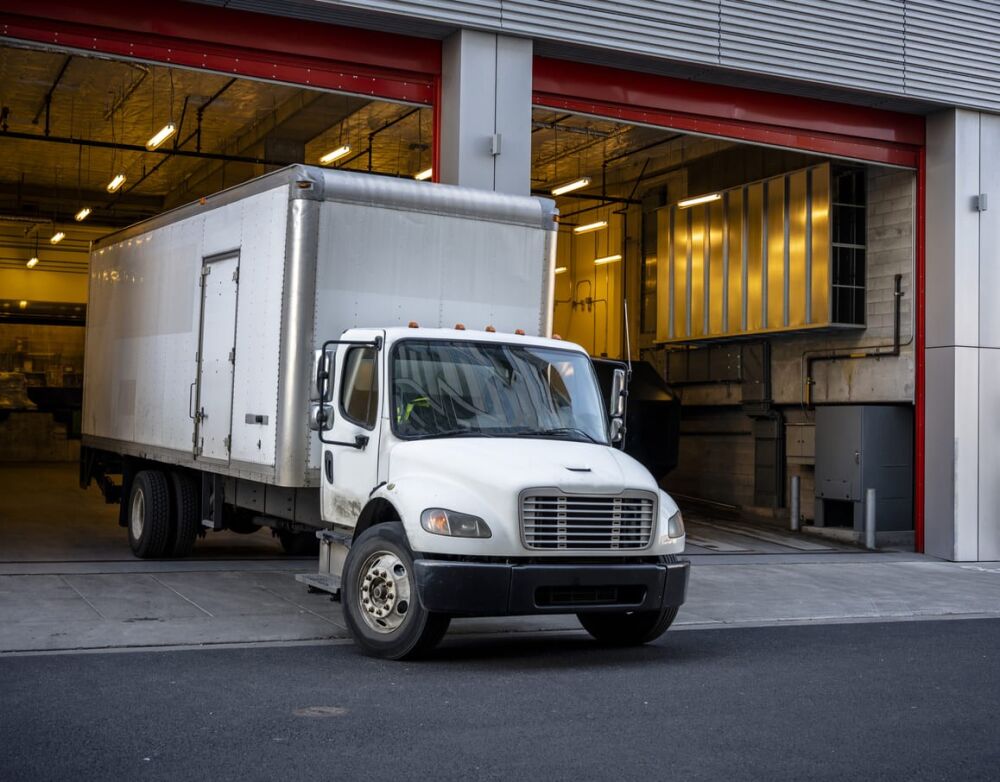

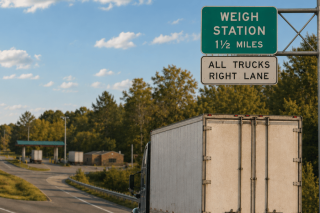
You cross into Oklahoma on a Tuesday morning and every weigh station on the interstate is lit up. Trucks line the shoulder, enforcement officers are walking the rows and traffic is backed up behind the ramp. Nothing about your day changed, but the odds just did.
DOT blitz week is a 72-hour enforcement initiative across the United States, Canada and Mexico. It is the largest targeted commercial motor vehicle enforcement program in the world, and for three days the number of intensive roadside inspections climbs far above normal. For an owner-operator, the difference between a clean pass and an out-of-service order comes down to what was checked before the truck left the yard.
Here is what to expect during DOT blitz week, what inspectors actually look at, and how to keep your wheels turning through it.
What Is DOT Blitz Week?
The CVSA International Roadcheck Explained
Blitz week is the common name for the CVSA International Roadcheck. The Commercial Vehicle Safety Alliance writes the out-of-service criteria inspectors use and coordinates enforcement agencies across North America. During the 72-hour window, certified officials average roughly 15 vehicle inspections every minute.
Why It Is Also Called DOT Week or the DOT Blitz
You will hear it called DOT Week, the DOT Blitz or simply blitz week. Trucking companies, brokers and drivers use the names interchangeably. It is one event under several names, and the industry treats it as a week to prepare for and pass inspection.

When Blitz Week Happens and How Long It Lasts
The 72-Hour Window
International Roadcheck usually runs for three days in mid-May. CVSA announces the exact dates months ahead, so check the current year's schedule rather than assuming. Inspections happen at weigh stations, temporary sites and roving patrols, and enforcement often ramps up the week before the official start.
Other CVSA Enforcement Campaigns Throughout the Year
Roadcheck is the biggest event, but it is not the only one on the calendar.
-
Operation Safe Driver Week, typically in July, targets driving behavior rather than equipment: speeding, following too closely and improper lane changes. The Operation Safe Driver program also enforces against other motorists, not just commercial vehicles.
-
Brake Safety Week, typically in late August, brings seven days of mostly Level IV inspections focused on brake components. Current details are on the CVSA brake safety campaign page.
-
Unannounced initiatives, such as a one-day Brake Safety Day or a five-day hazardous materials blitz, can happen at any point in the year with no warning.
Preparation can't be seasonal. A truck that only gets a hard look in May is a truck that fails in October.
The Focus Areas CVSA Names Each Year
CVSA highlights specific categories for extra scrutiny each year and publishes them in advance. Everything is still inspected, but the named categories draw extra attention on both the driver side and the vehicle side. Recent years have centered on two.
ELD Tampering, Falsification and Manipulation
ELD compliance means the electronic logging device accurately records duty status and hours of service as federal rules require. Inspectors look for ELD tampering, unlogged driving time and logs that don't match fuel receipts or earlier inspection reports. ELD falsification has ranked as the second most-cited violation in recent years, topping 58,000 instances annually, and records that aren't accurate and current lead to citations or an out-of-service order on the spot.
Cargo Securement and Load Stability
Improperly secured loads create hazards for you and other motorists. FMCSA cargo securement rules are set out in 49 CFR Part 393, and inspectors check tie-downs, blocking and bracing as well as weight distribution and load stability. Unsecured loads generate more than 18,000 violations in a typical year and can trigger an immediate out-of-service order. If you run flatbed or step deck freight, this is where your exposure is highest.
What Inspectors Check During Roadside Inspections
The Level I Inspection and Its 37 Steps
Most blitz week inspections are the North American Standard Level I inspection, a thorough 37-step examination of both vehicle and driver that takes 45 minutes to an hour. Only a Level I inspection earns the CVSA decal, which is valid for up to three months and tends to move you through weigh stations faster.
Driver Credentials and Hours of Service
Driver compliance starts with a valid commercial driver's license, a current medical certificate and a clean record of duty status. Officers verify that credentials are up to date and that logs match the supporting documents in the cab. A driver-only inspection covers all of this without touching the equipment.
Vehicle Components and Maintenance
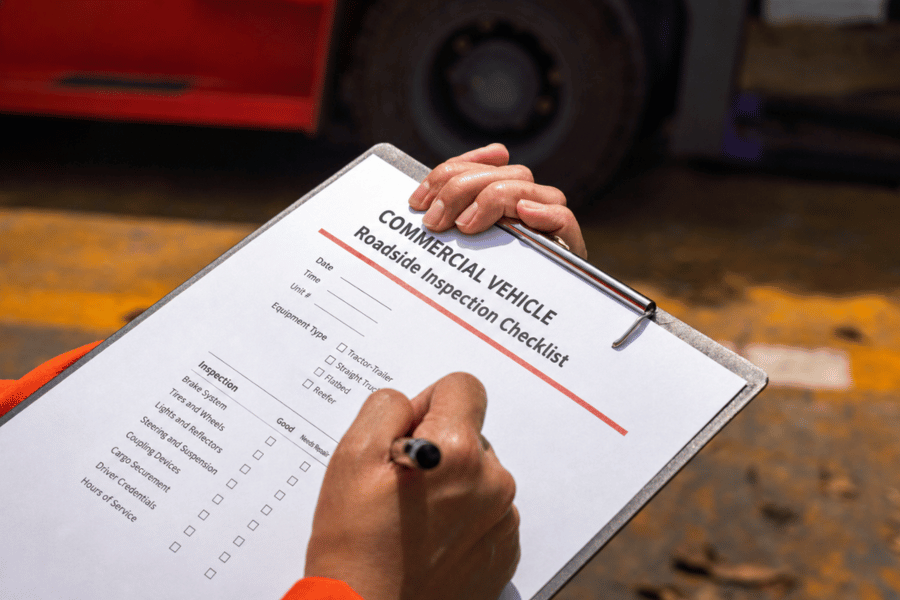
On the vehicle side, inspectors work through brakes, tires, lights, steering, suspension and coupling devices. Maintenance violations remain the largest category by volume, and research from the American Transportation Research Institute tracks equipment upkeep as a persistent cost pressure for small carriers.

The DOT Violations That Put Trucks Out of Service
Roughly 18 percent of vehicles inspected during a recent Roadcheck were placed out of service. These critical violations come up most often:
-
Brake systems. A vehicle is parked when 20 percent or more of its service brakes are defective. Out-of-adjustment slack adjusters, cracked drums and chafed air hoses are the usual culprits.
-
Tires. Tread below the minimum, exposed belt material or an audible leak ends the stop immediately, and a flat tire is an automatic out-of-service condition.
-
Lights and reflectors. These are the cheapest DOT violations to prevent and among the most frequently written. A burned-out marker lamp is a citation you handed over for free.
-
Improperly secured loads. Missing or damaged tie-downs, inadequate working load limits and freight that shifted in transit.
-
Hours of service and ELD noncompliance. Form and manner errors, missing documents and falsified logs, which follow the driver rather than the truck.
Out-of-Service Orders and What They Trigger
An out-of-service order means the truck doesn't move until the defect is repaired, which at the roadside means a mobile mechanic at emergency rates or a tow. The repair bill is rarely the expensive part. The violation is recorded against your DOT number in the FMCSA Safety Measurement System, where it counts against you for two years. Underwriters check that record at renewal, which is one of the quieter reasons owner-operator insurance premiums climb.
Your Pre-Blitz Safety and Compliance Checklist
A DOT inspection checklist isn't complicated. The trick is running it before the blitz instead of during it, and it pairs naturally with the daily habits that keep drivers safe on the road.
The Driver Side
-
Credentials. CDL, medical card, registration, current annual inspection and proof of insurance, all valid and in the cab.
-
ELD compliance. Confirm the device works, your duty status is accurate and there is no unlogged driving time in the record.
-
Supporting documents. Fuel receipts and trip paperwork should back up your hours of service, not contradict them.
The Vehicle Side
-
Brakes and air system. Check pushrod travel at every wheel position, measure lining thickness, run a leak-down test and trace hoses for chafing.
-
Tires, wheels and lights. Gauge tire pressures instead of thumping them, check for loose lug nuts and do a full walkaround with someone cycling the brakes and signals.
-
Securement gear. Inspect straps for cuts and chains for stretched links, and confirm your tie-downs and working load limits cover the freight on board.
What Blitz Week Does to Freight and Rates
Capacity, Spot Rates and Rolled Freight
Blitz week creates temporary bottlenecks across North American freight. Some trucking companies park voluntarily rather than risk an inspection, contracted carriers get stretched and brokers roll freight into the following week. Capacity tightens and spot rates become more volatile, which is worth understanding alongside how freight rates are calculated. If your equipment and paperwork are in order, a tight spot market is an opportunity, not a problem.
Roll Through the Next DOT Blitz Week Instead of Sitting It Out
You can't talk your way out of a DOT blitz week on the shoulder. It is won weeks earlier, in the yard, with a gauge, a flashlight and an hour you would rather spend elsewhere. Safety and compliance aren't paperwork; they are uptime. If you want the dispatch side handled and loads booked at rates that hold up, get in touch with our team and we will get you set up before the next campaign. Stay ahead of it, and you keep finding good freight while everyone else sits.