
Owner-operators spend a lot of time on load boards searching, filtering, checking rates and negotiating, yet many still end up with mediocre freight that barely covers costs. The problem usually isn't the load board but how it is used. Load boards are online marketplaces that connect shippers, freight brokers and carriers to match loads with available trucks, helping shippers and brokers find capacity and helping truckers find loads with fewer empty miles.
What Is a Load Board?
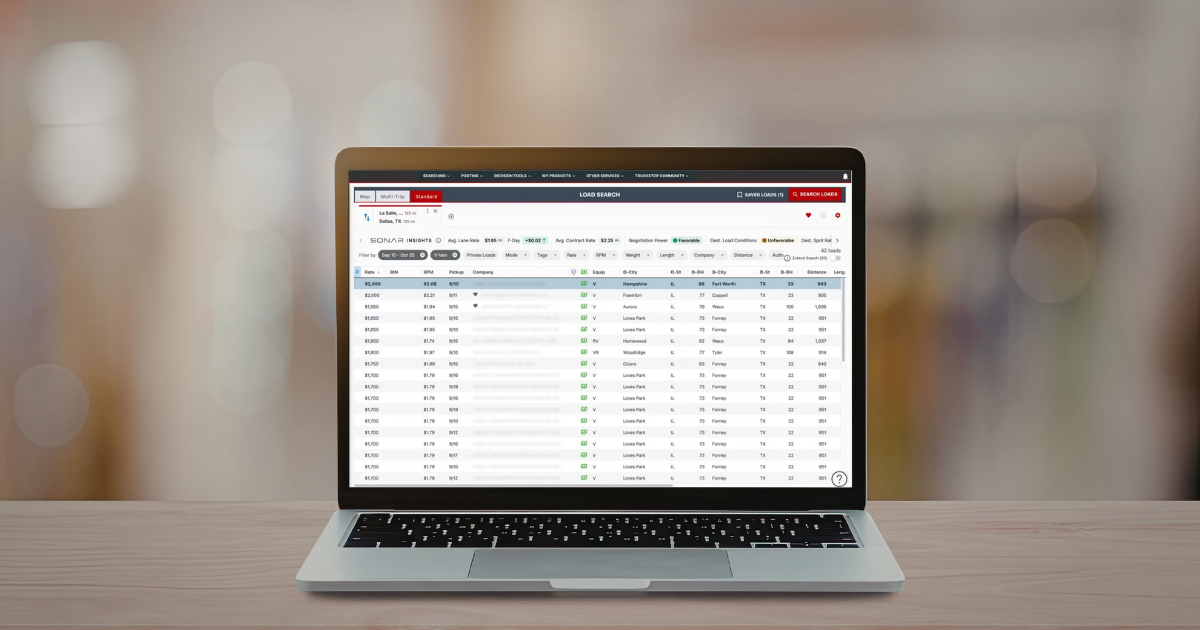
A load board is a digital platform where freight brokers and shippers post loads and carriers search for freight to haul. Brokers list details such as origin, destination, rate and required equipment, carriers filter the listings and contact brokers to book, and the deal is usually finalized off-platform. The Bureau of Transportation Statistics reports that trucking moves the majority of U.S. freight tonnage, and in the spot market, load boards are the primary sourcing tool.
Common features include:
-
Search filters by equipment, lane and rate
-
Broker contact information and credit scores
-
Broker credit and safety ratings you can review before you commit
-
Rate analytics and lane history
-
Real-time alerts
-
Mobile access, load tracking and integration with Transportation Management Systems (TMS)
-
Rate check and comparison tools
Free load boards offer basic features but usually fewer loads and restricted tools, while paid boards add vetted networks, broker verification and TMS integration. Public boards are open to any registered user, and private boards are exclusive networks run by large brokers. Popular boards include 123Loadboard (free and easy to use), C.H. Robinson (a large free board), DAT (the broadest coverage), Truckstop (feature-rich) and Trucker Path (community-focused).

Why Load Boards Matter for Owner-Operators
For small carriers without contracts, load boards are the primary source of freight, and they help reduce empty miles by finding backhauls and consistent routes. According to ATA industry data, the vast majority of U.S. motor carriers operate fewer than six trucks. These small carriers are the backbone of spot freight, and load boards are the market they work in every day. Competition compresses rates, though, so use them strategically:
-
Know your true cost per mile
-
Filter for lanes with strong reloads
-
Check the broker's credit before booking
-
Use rate history to negotiate better rates
-
Avoid low-volume lanes with inconsistent freight
Types of Load Boards
There are three main types of load boards:
-
Public: open to everyone and often free, which suits small carriers and new owner-operators
-
Private: restricted access, with higher-quality freight and trusted networks
-
Freight exchanges: real-time matching platforms with advanced tools for load matching and negotiation
Each type includes free and paid options, and paid boards offer more data, more tools and better-quality loads.
Load boards are packed with features for carriers, trucking companies and freight brokers. The best boards go beyond listing loads: their advanced search finds freight that fits your equipment, preferred lanes and schedule, and most let you post trucks, search loads and book instantly, saving valuable time.
Search, Alerts and Mobile Access
Many free load boards allow unlimited searches, giving carriers access to a wide range of freight at no extra cost. Real-time alerts notify you about new loads, changes in freight rates and updates from trusted brokers, so you can respond quickly to market shifts.
Mobile access is essential for today's trucking business. Apps from boards like Trucker Path and 123Loadboard let truckers find loads, manage shipments and talk to brokers from the road, with features like document management and DOT authority verification.
Rate Comparison and Broker Verification
Most load boards include tools to compare freight rates, lanes and market averages, which helps you make informed decisions, negotiate better pay and choose the right loads, reducing empty miles and improving earnings.
Load boards also support security and reliability with broker credit checks and document management, helping you work with trusted brokers and shippers and reducing the risk of payment problems.
Operational Tools
Real-time notifications about new loads and market changes keep you informed and help you make proactive decisions.
Used well, load boards help carriers find loads, reduce empty miles and increase profitability. With advanced search, mobile apps, comparison tools and document management, they save time and help you secure the right loads, whether you are an owner-operator or managing a fleet.
Common Load Board Mistakes Truckers Make
FMCSA carrier data shows a large and growing number of registered carriers competing for available loads, and in that environment, reactive load selection is one of the fastest ways to shrink your margins. Common mistakes include:
-
Accepting loads without calculating the full cost (fuel, maintenance, insurance)
-
Ignoring broker credit scores and risking slow payment or nonpayment
-
Booking into dead markets, which leads to high deadhead miles
-
Not using rate history to negotiate and leaving money on the table
-
Relying too much on free boards with limited freight quality and volume
How to Find Better-Paying Freight
Finding better freight isn't about spending more time on load boards; it is about spending that time more wisely. Carriers who consistently get higher rates follow a repeatable process: they know their lanes, they know their numbers and they negotiate from knowledge rather than desperation.
-
Know your break-even and target rates before searching, and use the board's freight matching tools to find better-paying loads
-
Use lane rate history to negotiate from a data-backed position
-
Plan reloads to avoid deadhead and keep your truck moving
-
Check the broker's credit score and payment terms before booking
The OOIDA Owner-Operator Survey consistently shows that operating expenses consume most of an independent carrier's gross revenue, so margins erode quickly without disciplined freight selection. Used strategically, load boards give you access to a wider range of well-paying loads and better profitability.

How to Book Loads: Step by Step
-
Create an account and enter your business and equipment details
-
Filter for loads that match your equipment and preferred lanes
-
Post your truck's availability so brokers and shippers can find you
-
Bid on loads or contact brokers directly to book
-
Manage shipments and documents through the load board platform
Free Load Boards vs. Paid Platforms
Free load boards cost nothing but usually offer fewer loads and features. Paid boards provide more advanced tools, rate data, better-quality freight and more loads for instant booking. Most paid boards charge a monthly subscription that varies with features, typically $54 to $329 a month, while free boards are useful for extra sourcing or for new carriers building relationships.
Direct Freight Opportunities
Some load boards let carriers book loads directly from shippers, bypassing brokers. Fewer intermediaries can mean better margins.
Is a Dispatch Service Worth It?
Load boards give you access to freight; a dispatch service adds strategy. Professional dispatchers negotiate better rates, position your truck for strong reloads and handle back-office tasks so you can focus on driving. The benefits include:
-
More time driving, less time negotiating with brokers
-
Stronger rate negotiation backed by market knowledge
-
Consistent load flow and better lane planning
-
Fewer deadhead miles
At EverHaulin Logistics, we treat freight sourcing as a margin problem, not just a scheduling problem. We focus on rate quality, lane positioning and keeping your truck productive, not just busy.

The Bottom Line on Load Boards
Load boards are powerful tools, but success depends on how you use them. Owner-operators who understand their costs, negotiate with data and plan strategically outperform those who simply scroll for available loads, and combining smart load board use with professional dispatch can improve profitability in a competitive market.
If you are tired of chasing low-paying freight and spending hours on load boards, a professional dispatch team can change your operation. EverHaulin Logistics helps owner-operators find better loads, negotiate stronger rates and stay moving. Contact us to get started.